HISTORY OF THE COMUNAL GARDENS
he early years 1964-2011
In the summer of 1964, the last house, no 65, was being completed in Maisemore Gardens. There was still a pile of sand on what was to be the lawn but a tree, a Prunus Amanogawa, had already been planted by the developers, who had completed the landscaping of the gardens.
The land to about halfway
up the road from the sea to the square was made-land and the
level of the lawn on the square had been raised so that the
trunks of the three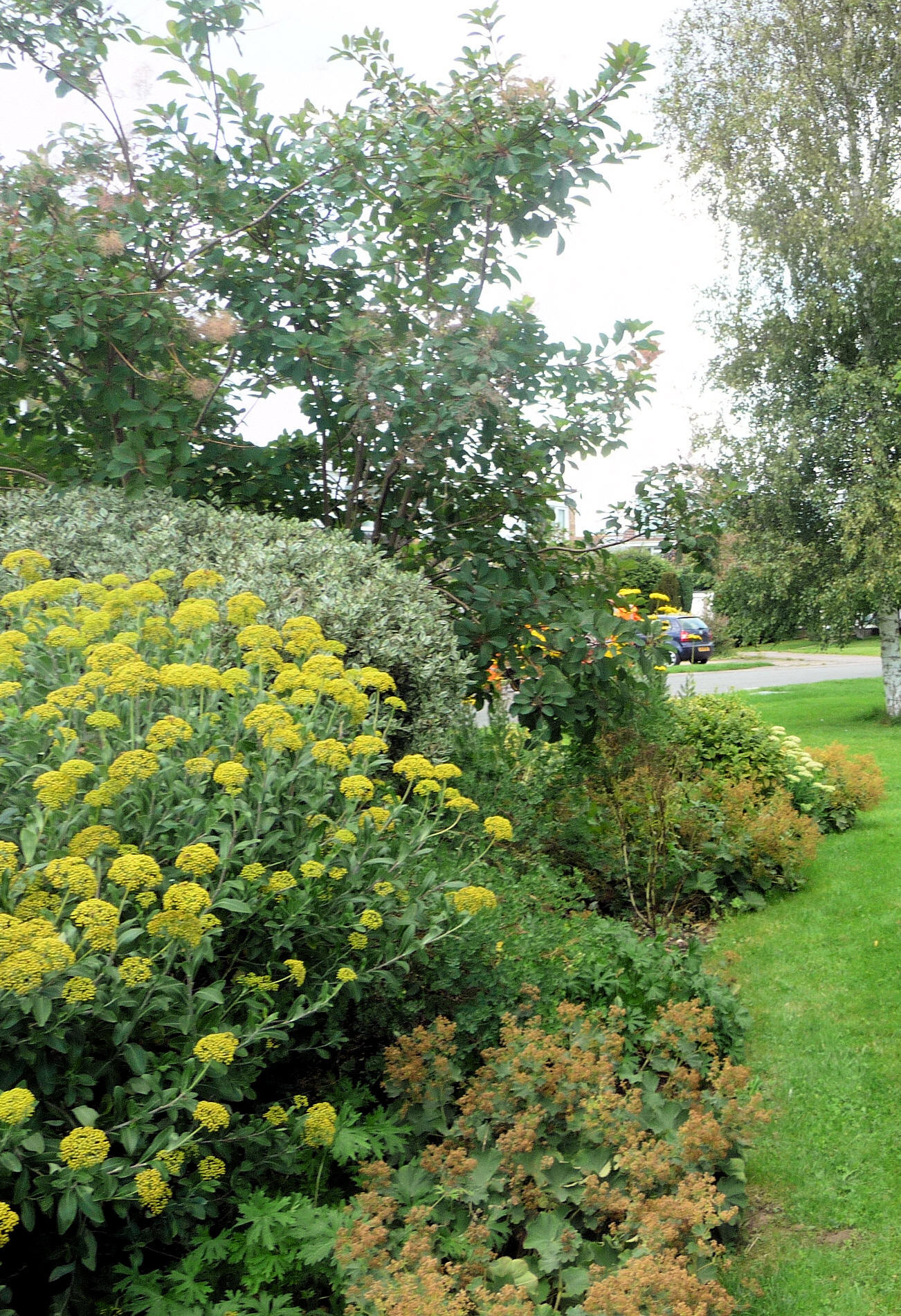 alders
and the large willow all rose at right angles out of the ground.
We were told that this would mean they would soon die. One
alder did, but the other two lasted about fifty years and the
willow, which was quite old, was removed much later.
Elsewhere in the gardens three mature ashes had also been
retained. Some planting had been done: there was a
flowering cherry by number 39, a silver birch at number 27, two
Leylandii cypresses reaching for the sky, one on the main lawn
and one by number 16 and the rose bed from West Road to number
70. Between the shop, number 68, and number 70 was a row
of mature sycamores on our boundary with what is now Brent
Court. The appearance was very open and park like, just
grass and trees – no beds, except for the roses at the entrance.
Once the Council of Management took over some more trees were
bought from the Forestry Commission, the silver birches and
scot’s pine by number 46, the weeping elm by number 39, an oak,
which has since been removed, outside number 34, an acer, which
has just been removed, by the shop, a Prunus Amanogawa opposite
West Road and a red sycamore by the electricity sub-station.
After a while it was decided to remove the monstrous Leylandii
cypresses which did not suit the gardens. A small, slow
growing, so we were told, cypress was put in place of the one by
number 16.
alders
and the large willow all rose at right angles out of the ground.
We were told that this would mean they would soon die. One
alder did, but the other two lasted about fifty years and the
willow, which was quite old, was removed much later.
Elsewhere in the gardens three mature ashes had also been
retained. Some planting had been done: there was a
flowering cherry by number 39, a silver birch at number 27, two
Leylandii cypresses reaching for the sky, one on the main lawn
and one by number 16 and the rose bed from West Road to number
70. Between the shop, number 68, and number 70 was a row
of mature sycamores on our boundary with what is now Brent
Court. The appearance was very open and park like, just
grass and trees – no beds, except for the roses at the entrance.
Once the Council of Management took over some more trees were
bought from the Forestry Commission, the silver birches and
scot’s pine by number 46, the weeping elm by number 39, an oak,
which has since been removed, outside number 34, an acer, which
has just been removed, by the shop, a Prunus Amanogawa opposite
West Road and a red sycamore by the electricity sub-station.
After a while it was decided to remove the monstrous Leylandii
cypresses which did not suit the gardens. A small, slow
growing, so we were told, cypress was put in place of the one by
number 16.
The
developers continued to do the maintenance until we finally
managed to get our hands on the freehold. They generously
made over to us their 36” Dennis motor mower.
Various residents tried to keep the grass under and the Dennis
was replaced with a sit-on mower which was not very satisfactory
and did not last long. Roy Fairchild, the treasurer, who
worked for Colts, managed to find us one of their workers, who
did the gardens for a while then introduced another Colts
worker, Mike Moran, who maintained the gardens lovingly for more
than twenty years. He was paid a fixed sum over the year
and worked to his own timetable. He did not get on with
sit-on mower so we bought him a Hayter which he pushed valiantly
for years, always accompanied by a big wheelbarrow and hoe, and
with these he kept the gardens looking magnificent. When
it got too much for him his youngest son, Simon, who had done a
horticultural training, took over and continued to look after
them until about 2011.
Recent Times 2011- the present day
At the 2018 AGM concern
was raised about the gardens. Members were very
appreciative of the sterling work done by the garden club but
felt the elderly and overgrown shrubs needed some professional
attention. A quick survey of as many members as could be
reached revealed that almost all members cared about the
gardens, even though they did not play an active part in
maintaining them. The consensus was that they wished to be
consulted about any major changes, liked the gardens to be
friendly to wildlife and have a natural look; they
particularly loved the alders!
In response to their
wishes the Council of Management decided that a professional
should be employed to see to the shrubs and that we should
engage a garden landscaper to prepare a plan to refurbish the
gardens. With the help of Diana Williams several firms
were consulted and we asked Jessica Bateman, of Blooming
Lovelies, to prepare a plan for bed A, alongside number
46. This plan was presented to the next AGM; members
had various suggestions to make, in particular that the plants
that were doing well there should be retained. An amended
plan was made and the work was done in August of that year.
The pruning of the shrubs had been carried out by Jess’s team
who also planted a mixed hedge of locally grown plants
alongside the garage yard belonging to the seventies; one
of the complaints made during the survey was that they felt
neglected.
T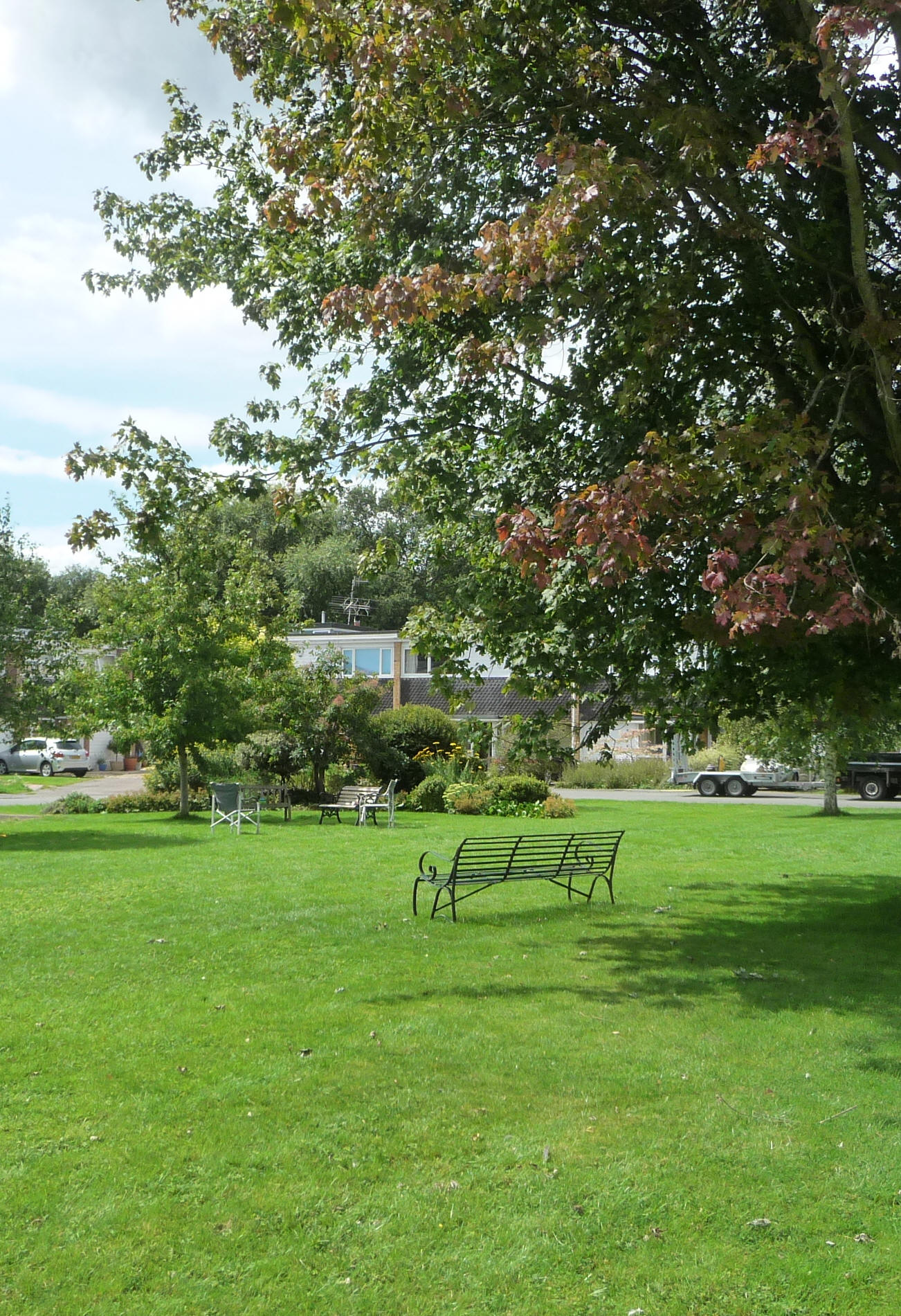 he
members expressed satisfaction with the work done by Blooming
Lovelies. However, given the amount of our input into the
final plan, we decided to do the rest of the designing
ourselves. Bed A, on the lawn in the square, was cut back
and filled in with plants in blues and yellows to continue the
original scheme. Diana Williams had suggested we should
have a scented bed, so, when we refurbished bed D,
alongside number 16, which was very dull and overgrown, we
planted it with a variety of scented shrubs, retaining some of
the privet as a frame. The planting has taken a long time
to establish itself but should soon be showing results. Suzie
Daniels had suggested a herb bed, so when the bed on the north
corner of West Road needed attention we planted it up with
herbs, which seem to be doing well; like all the
planting, it seems to have developed a plan of its own!
he
members expressed satisfaction with the work done by Blooming
Lovelies. However, given the amount of our input into the
final plan, we decided to do the rest of the designing
ourselves. Bed A, on the lawn in the square, was cut back
and filled in with plants in blues and yellows to continue the
original scheme. Diana Williams had suggested we should
have a scented bed, so, when we refurbished bed D,
alongside number 16, which was very dull and overgrown, we
planted it with a variety of scented shrubs, retaining some of
the privet as a frame. The planting has taken a long time
to establish itself but should soon be showing results. Suzie
Daniels had suggested a herb bed, so when the bed on the north
corner of West Road needed attention we planted it up with
herbs, which seem to be doing well; like all the
planting, it seems to have developed a plan of its own!
Mark Tapley did the original planting; everything he put in the ground seemed to do very well so we were dismayed when he retired. Fortunately the replacement he found for us, Paul Laugesen, was a demon worker and kept everything looking very neat, but, unfortunately, after a year he developed carpel tunnel syndrome in both hands and he had to retire. New Maisemore gardener is Richie Harris-Liston. He's around usually on Tuesdays or Wednesdays and does some private work for Maisemore people.
The garden will continue
to change; some plants die, others flourish. At the
moment we are thinking about planning for increased summer heat
and drought. In response to the urging of
horticulturalists we are setting the mower higher and have left
patches of grass to grow in the hope of encouraging wildlife.
It looks a bit untidy, but we are trying to do our bit for
nature!
Foot
|
Copyright © 2026 Maisemore Gardens Ltd All Rights Reserved.
Website Design: Emsworth
Online |